Developer Marketing
Programmatic SEO for Real Estate: How to Rank for 1,000+ Locations
How to create hundreds of location-specific pages that rank. The approach I used to build 65,291 programmatic pages on REN.PH across four data verticals.
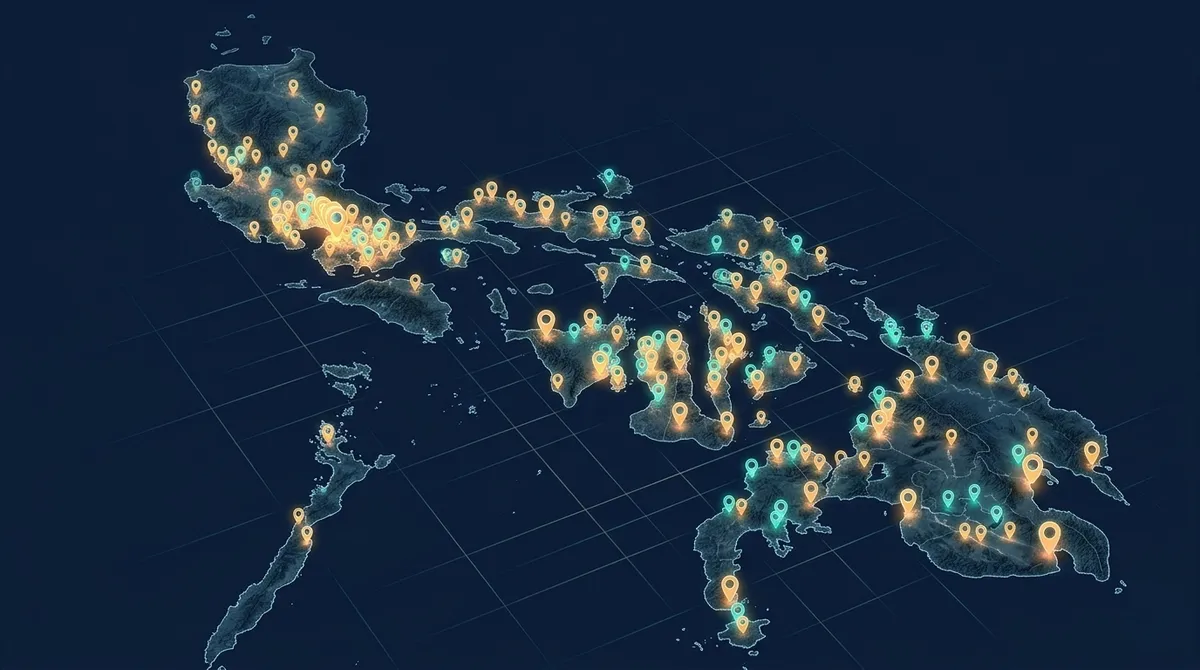
There are over 1,600 cities and municipalities in the Philippines. Each one has people searching for "house and lot in city" or "zonal value city 2026."
You can't write 1,600 unique pages by hand. But you can build them programmatically.
This is programmatic SEO: using data and templates to generate large numbers of pages that target specific, high-intent search queries. It's how REN.PH built 65,291 programmatic pages across four data verticals (brokers, zonal values, DHSUD LTS verification, geographic coverage). And it's particularly powerful for real estate.
What Is Programmatic SEO?
Programmatic SEO is the practice of creating pages at scale using structured data and templates. Instead of writing each page manually, you:
- Start with a dataset (locations, properties, categories)
- Create a template that turns data into useful content
- Generate pages automatically for each data point
- Ensure each page provides genuine value to searchers
The key word is "genuine value." This isn't about spinning content or creating doorway pages. It's about systematically answering questions that people are actually asking, at a scale that manual content creation can't match.
Examples of programmatic SEO in the wild:
- Zillow's neighborhood pages (thousands of location-specific guides)
- Yelp's category pages ("best pizza in city")
- Tripadvisor's attraction listings (every tourist spot in every city)
- Zapier's integration pages (every app combination)
These companies rank for millions of long-tail queries because they've built systems that generate useful, targeted pages at scale.
Why Programmatic SEO Is Perfect for Real Estate
Real estate is inherently location-based, which makes it ideal for programmatic SEO:
Massive keyword opportunities. Every city, barangay, and landmark is a potential keyword. "House and lot in General Trias," "condo near BGC," "lot for sale in Amadeo Cavite." These are real searches with real intent.
Structured data availability. Property data, zonal values, location information, and geographic hierarchies are all structured. They can be stored in databases and transformed into content.
Repeatable content patterns. A page about properties in City A follows the same structure as a page about properties in City B. The template is consistent; the data changes.
High commercial intent. People searching for location-specific real estate queries are often ready to buy. They've moved past "should I buy a house?" to "where should I buy a house?"
Portals are winning with this approach. Lamudi and Dotproperty rank for thousands of location queries because they have location pages for every city. You can compete by building your own.
The Approach: Data + Templates + Unique Value
Here's the framework I used for REN.PH:
Step 1: Identify Your Data Source
Every programmatic SEO project starts with data. For real estate, your data sources might include:
- Philippine Standard Geographic Code (PSGC): Official list of all regions, provinces, cities, municipalities, and barangays
- BIR Zonal Values: Property valuation data by location
- Your own inventory: Projects, unit types, pricing
- Third-party data: Points of interest, demographics, school locations
The quality of your data determines the quality of your pages. Garbage in, garbage out.
For REN.PH, I started with multiple data sources: PRC exam records for broker profiles, DHSUD License to Sell registry for projects, and BIR zonal value data. This gave me structured information across multiple verticals.
Step 2: Design Your Template
The template is where data becomes content. A good template:
- Answers the specific question the searcher is asking
- Includes data that would be difficult to find elsewhere
- Provides context that makes the data useful
- Links to related pages (other locations, related tools)
- Has a clear call to action
For zonal value pages on REN.PH, the template includes:
- Current zonal values by classification (residential, commercial, agricultural)
- What zonal values mean for buyers and sellers
- Historical context where available
- Nearby cities with links to their zonal value pages
- Related tools (calculators, property search)
The template is consistent, but each page is unique because the data is unique.
Step 3: Add Genuine Value Per Page
This is where most programmatic SEO fails. It's not enough to just plug data into a template. Each page needs something that makes it worth visiting.
Ways to add unique value:
- Contextual information: What does this data mean? Why does it matter?
- Related data points: Connect this page to other relevant information
- Tools and interactivity: Calculators, filters, comparison features
- Local insights: Information specific to this location that isn't just pulled from a database
For REN.PH, every page explains what the data means and why it matters. Broker profiles link to PRC verification. Project pages show LTS status. Zonal value pages explain how the values affect transactions. It's not just a data dump.
Step 4: Build Your Internal Linking Structure
Programmatic pages should link to each other in logical ways:
- City pages link to barangay pages
- Location pages link to nearby locations
- Content pages link to relevant tools
- Everything links back to pillar content
This creates a web of related content that:
- Helps Google discover and crawl your pages
- Distributes page authority across your site
- Keeps users engaged with related content
- Signals topical expertise to search engines
For REN.PH, every page links to:
- Related entities (broker → projects they're accredited with, project → developer)
- Geographic siblings (nearby locations)
- Related tools (calculators, verification tools)
- Hub pages (cohort pages for brokers, developer portfolios)
Step 5: Technical Implementation
The technical side matters. Your programmatic pages need:
Clean URLs: /zonal-value/cavite/general-trias/ not /page.php?id=12345
Proper meta tags: Unique title and description for each page, generated from the data
Schema markup: Structured data that helps Google understand what the page is about
XML sitemap: A complete, up-to-date sitemap that includes all generated pages
Fast loading: Programmatic pages can be server-rendered or statically generated for speed
Mobile-friendly: Most real estate searches happen on mobile
For REN.PH, I use static site generation with incremental builds. Pages are pre-built at deploy time, which means fast loading and easy caching.
Common Mistakes (And How to Avoid Them)
I've seen a lot of programmatic SEO attempts fail. Here are the common pitfalls:
Thin Content
The mistake: Creating pages that are just data with no context. A page that shows "Zonal Value: PHP 15,000/sqm" and nothing else.
The fix: Every page needs enough content to be genuinely useful. Add explanations, context, related information, and next steps.
Duplicate Content
The mistake: Pages that are essentially identical except for one data point. If your Cavite page and Laguna page have the same content with just the city name swapped, Google will see them as duplicates.
The fix: Use data to create genuinely different content. Different locations should have different zonal values, different nearby landmarks, different characteristics. Let the data create natural variation.
No Internal Linking
The mistake: Creating thousands of orphan pages with no links between them.
The fix: Build a logical linking structure. Link parent to child, sibling to sibling, and content to tools. Make it easy for both users and search engines to navigate.
Ignoring Search Intent
The mistake: Creating pages for keywords that don't match what people actually search for.
The fix: Use Search Console, keyword tools, or competitor analysis to identify real queries. Build pages that answer those specific questions.
Poor Technical Implementation
The mistake: Slow pages, broken links, missing sitemaps, blocked crawling.
The fix: Test everything. Monitor crawl stats in Search Console. Fix errors quickly. Treat your programmatic pages with the same care as your manual content.
Over-Automation
The mistake: Fully automated content with no human oversight, leading to nonsensical or low-quality pages.
The fix: Review a sample of generated pages before publishing. Have quality checks in your build process. Some manual curation is usually necessary.
Results: What 65,291 Pages Looks Like
REN.PH is my proof that this approach works. Here's the current state:
Current scale, counted live in the XML sitemaps on 21 August 2026:
- 65,291 programmatic pages across four data verticals
- 25,255 broker profile pages (PRC-verified)
- 238,203 zonal value records across 38,272 barangays
- DHSUD License to Sell records searchable by name for LTS verification
- Geographic pages at every level: region, province, city, barangay
Four programmatic verticals:
- Brokers: Scraped from PRC exam results (2011-2026), each profile verifiable
- Zonal Values: 238,203 BIR records across 16 regions, 82 provinces, 1,601 cities/municipalities, 38,272 barangays. Transfer tax calculator.
- DHSUD LTS Verification: License to Sell records in a search-by-name verification tool. Not individual pages. A verification feature. The record count is not published: no public endpoint exposes it, so it stays unverified rather than cited.
- Geographic Coverage: Programmatic pages at every geographic level with contextual information
What made it work:
- Official government data that people can't easily find elsewhere
- Verification as value (every page provides trust signals)
- Strong internal linking across entities (broker → projects → developers)
- Interactive tools that provide additional value
- Fast, mobile-friendly pages with proper schema markup
Programmatic SEO is a compounding investment. Each new data source creates another vertical of indexable pages.
Should You DIY or Hire?
Honest answer: it depends on your technical resources.
DIY Makes Sense If:
- You have a developer on your team (or are one yourself)
- You're comfortable with Python, JavaScript, or similar
- You have access to clean, structured data
- You can commit time to building and maintaining the system
- You want full control over the implementation
Technical requirements for DIY:
- Database or structured data management (PostgreSQL, Airtable, Google Sheets)
- Scripting language (Python is common)
- Static site generator or CMS that supports programmatic pages
- Understanding of SEO fundamentals
- Deployment and hosting knowledge
Hire Someone If:
- You don't have technical resources in-house
- Your time is better spent on other aspects of your business
- You want a faster path to results
- You need someone who's done this before and knows the pitfalls
- You'd rather pay for expertise than learn through trial and error
I build programmatic SEO systems for real estate businesses. If you want the results without the technical learning curve, that's what I do.
Getting Started
If you want to explore programmatic SEO for your real estate business:
- Audit your keyword opportunities. How many location-based queries could you target? How many product/unit type combinations? The size of the opportunity determines whether programmatic SEO is worth it.
- Assess your data. What structured data do you have access to? Property inventory? Location information? The better your data, the better your programmatic content.
- Look at your competition. Are portals ranking for queries you should own? What pages do they have that you don't?
- Decide on build vs. buy. Do you have the technical resources to build this yourself, or do you need help?
If you want to see programmatic SEO in action, check out the REN.PH case study where I break down the exact approach and results. Or if you want to know whether programmatic SEO makes sense for your business, get a free site audit and I'll tell you what opportunities you're missing.
Related: Case Study: REN.PH - 65,291 programmatic pages across four data verticals using official government data.
About the Author
Aaron Zara, licensed PRC real estate broker (PRC #0025157) with 18+ years in software engineering and digital marketing. I built REN.PH and write about real estate SEO strategies that actually work.
Learn more →